
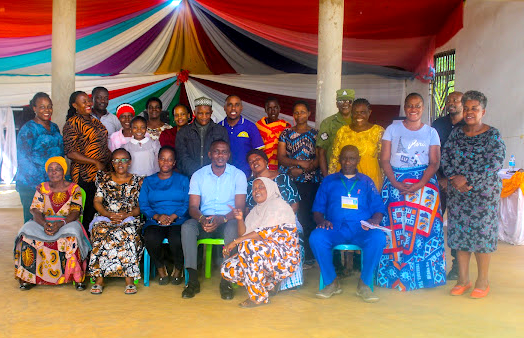
May 2026: Between 28 April and 2 May 2026, TGNP brought together a diverse group of community members, leaders, and advocates for an intensive community leadership training program focused on the prevention of gender-based violence and advancing gender equality. The training reinforced the important link between women seeking protection and the services meant to uphold community safety and justice, including gender desks and paralegal services.
Participants from Mabogini (Moshi DC), Mgagao (Mwanga), and Kalenga (Iringa) represented faith-based organizations, traditional leaders, paralegals, local government officials, and community advocates. Together, they reinforced the importance of community-driven action in creating safer and more equitable communities.
Tumaini Ijiko, the Community Development Officer and NGO Coordinator spoke on behalf of the Moshi District Council stating, “These sessions are a wake-up call. Areas like Mabogini are in dire need of this education. As a Council, we are committed to closely monitoring the implementation of all resolutions. We want to see measurable, large-scale change.”
Traditional leaders also signalled a shift in perspective. Isaack Laizer, a local elder in Mabogini Ward, expressed how the training demystified the law. He said, “This wasn’t just another seminar; it opened our eyes to our legal responsibilities. We now recognize our duty to protect the community from practices like female genital mutilation. We are ready to work day and night to end these acts.”
Practical Tools for Community Action
The training combined practical skills, rights education, and community action to support long-term social change. Participants strengthened their understanding of human rights and gender equality, learned survivor-centered approaches to responding to GBV, and built skills in case management and referral pathways.
The training sessions emphasised the benefits of improving the connections between community leaders and formal protection services such as Police Gender Desks, along with replacing harmful traditions with social norms based on equality and dignity.
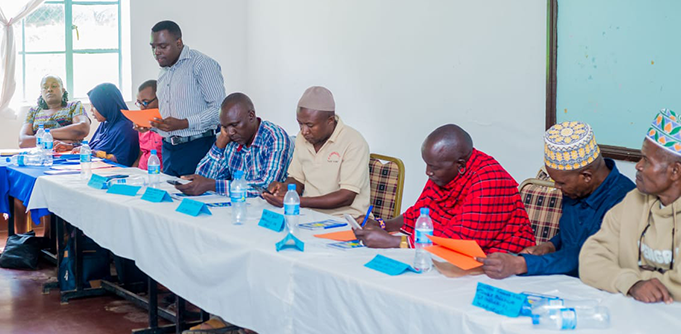
Regional Insights
Mabogini Ward, Moshi District Council
The discussions during the training session in Mabogini highlighted the tension between national legal frameworks and local traditional practices.
- The Power of Collaboration: Facilitator Deogratius Temba emphasised that building the capacity of local leaders and community advocates will ensure national strategies, like The National Plan to Eradicate Violence against Women and Children (MTAKUWWA II), will reach everyone—especially women and girls living in rural areas.
- Barriers to Justice: SP Asia Matauka, the Kilimanjaro Regional Police Gender Desk Coordinator, noted that while GBV reporting systems have improved, elders who do not follow the legal pathways and “settle cases at home” often destroy the chain of evidence and thus prevent any legal recourse for women and girls.
- The Cost of Poverty: Anjelister Ngowi, a paralegal from WASHEMOVI, pointed out that bribery and traditional compensation/masale (money or gifts) serve to silence victims of GBV and their families, effectively allowing offenders to buy their way out of justice.
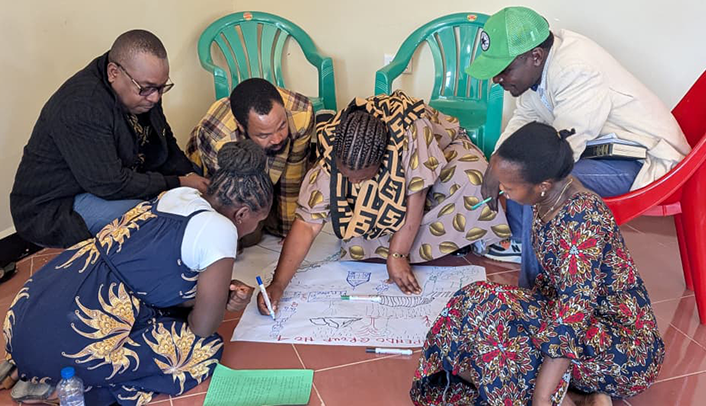
Kalenga Ward, Iringa District Council
In Kalenga, the participants reflected on the personal drivers of GBV.
- Breaking the Cycle: One local government official poignantly stated, “We are all nursing a wound… If we don’t break the silence today, we are just passing the baton of violence to our children.”
- The 72-Hour Window: A healthcare practitioner highlighted the critical medical window for survivors: “The first 72 hours are not just a medical window—they are a justice window.”
- The Ulanzi Economy: Participants discussed how the low cost of bamboo wine (TZS 500 for 2L) fuels child neglect and domestic abuse.
Mgagao Ward, Mwanga District Council
In Mgagao, the participants provided examples of how their ongoing efforts to support women and girls have created economic resilience and restored dignity for many.
- Breaking the Silence: Faudhia Juma from Kiburunge Village and Raphia Koshuma the Community Development Officer both observed that the awareness-raising activities taking place in primary schools in Pare are giving children the courage to report cases of FGM, early marriage, and physical abuse to the police.
- Economic Empowerment & Inclusion: Salome Salim is the Chair of the Mgagao Knowledge Centre and she describes how women are no longer enduring violence in the silence. Beyond reporting abuse, women are now active participants in Village Community Banking (VICOBAs) and local businesses, strengthening household resilience and community development.
- Restoring Dignity: Salome Salim, Chair of the Mgagao KC, with the support of the Ward Executive Officer intervened in a case of abuse where the woman was under threat of eviction. They provided the woman with legal advice and helped issue a formal legal warning to the husband. Today, the woman lives in her home in peace, with her rights protected and her dignity restored.
- Transforming Education: Rabi Mmar is a local teacher and counsellor, he describes how advocacy to support girls has reached Mgagao Secondary School. Girls in Mgagao faced long walks for water, they lacked toilets for privacy, and suffered from hygiene-related illnesses. After advocating for resources, support came from as far as the National Parliament, the TASAF, and TANAPA to build modern toilets for girls at the school. Mgagao Secondary School now boasts clean latrines, a dedicated girls’ room, sanitary pads, modern dormitories, and reliable, safe water. “This is more than infrastructure, it is empowerment,” says Mmar, “girls can now focus on their studies without fear or shame.”
The Road Ahead
The participants in the recent training sessions identified common and persistent challenges:
- Legal Contradictions: Friction between the Marriage Act and the Law of the Child Act creates confusion, leading some to believe spousal abuse is a private matter.
- Lack of Infrastructure: A severe shortage of Safe Houses leaves survivors trapped in abusive homes while their cases are processed.
- Rebranded Traditions: Practices like Ngolwa (forced marriage) are evolving, using cross-village recruitment to manufacture parental consent and evade detection.
- Corruption: Some local leaders accept bribes to hide evidence of violence, abuse, and neglect, and create delays to prevent women from accessing justice. Schools and religious institutions sometimes suppress GBV cases to protect their brand.
- Informal Agreements: There is tendency to settle GBV cases outside of the legal system, with family members making agreements rather than using legal channels.
- Substance Abuse: Alcohol and drug abuse fuels violence in the home. And, there is a lack of funding and resources to address addiction and mental health issues related to violence.
Recommendations
To continue making progress, the participants agreed to:
- Establish Village By-laws: Establish strict local regulations that protect children and youth from FGM and forced early marriage. Ensure GBV is a permanent agenda item during all village meetings.
- Legal Advocacy: Lobby for the removal of bail eligibility for suspects of aggravated child abuse and GBV.
- Institutional Integration: Formally integrate TGNP KC members into government MTAKUWWA committees.
- Digital Reporting: Establish a multi-sectoral WhatsApp Hub for real-time reporting and evidence sharing.
- Gender-responsive Budgeting: Ensure village and council budgets allocate specific funds for psychosocial support and menstrual hygiene management (MHM).
In many communities the fight against GBV is moving from words to decisive action to create a future where gender equality is a lived reality.
